








Crisis of Traditional Education: Are Schools and colleges becoming irrelevant
The education system all over the world is experiencing a radical change. Traditional schools and colleges have long been the staple of learning, which has been a factor in career and society. Nevertheless, the accelerated technology, changes in the job market, and an increase in the expectations of learners are posing a serious challenge: are these institutions becoming irrelevant?
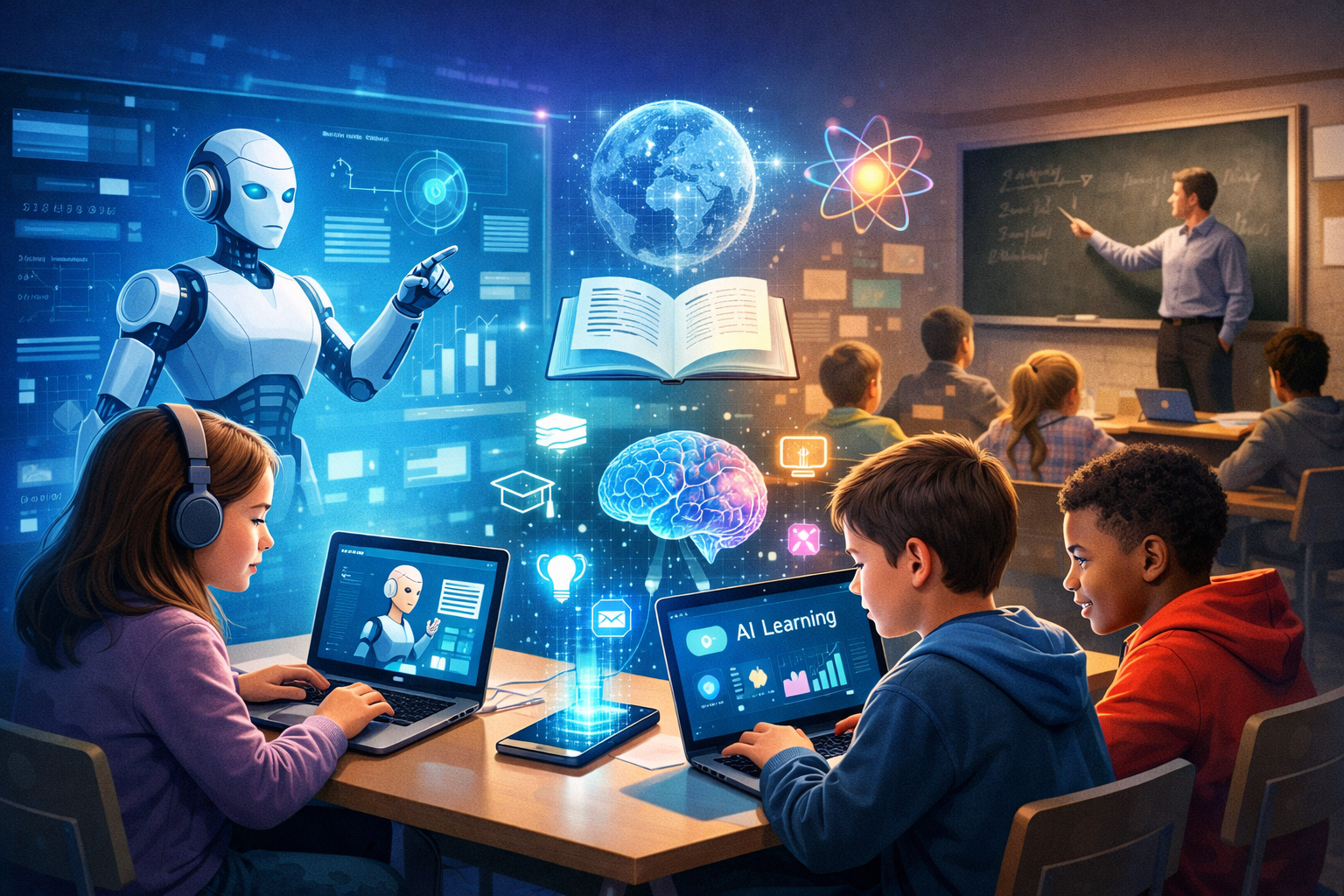
The current students are not limited to the classroom. Education is getting decentralized and personalized with access to digital platforms, artificial intelligence, and self-paced learning tools. The traditional education systems are being challenged by this change.
Major Causes of the Fall of Traditional Education.
- Inflexible curriculum not in line with industry demands.
- High cost of education with uncertain return on investment
- The emergence of online education and other credentials.
- Absence of practical and skills-based methods of learning.
- Lack of speed in adapting to changes in technology.
Obsolete Curriculum vs. up-to-date Skills.
Among the greatest criticisms made on traditional education is the fact that the curriculum is outdated. Most institutions continue to emphasize theoretical knowledge and ignore practical skills. Conversely, the modern industries require skills in such fields as data analysis, digital marketing, artificial intelligence tools, and critical thinking. This difference makes graduates ill equipped to face the real world.
More Financial Burden.
Another issue of concern is the increasing cost of education. Students tend to spend so much of their money on degrees, which are not even assured of a job. This has brought about an increasing doubt regarding the worthiness of traditional college education, particularly in cases where low cost options such as online certifications and skill based programs are in existence.
Learning Digital Disruption.
Online learning systems have transformed the world of education with its flexibility, cheapness, and accessibility. Students are now able to study quality courses taught by world experts without having to step into a classroom. This convenience is rendering traditional institutions less appealing especially to the young generations.
The Emergence of Alternative Education Models.
- Micro-credentials and online courses are becoming popular.
- Competency-based learning in lieu of a degree.
- Individualized and learning at a pace that suits the individual.
- Competition between corporate and university training programs.
- Blended learning, which is a mixture of online and offline learning.
Development of Skill-Based Education.
Skill based education emphasizes hands-on knowledge that can be immediately applied in the workplace. Sites providing coding, design and business skills are also picking up since they deliver instant value. The use of skills, which is more important than degrees, is becoming more significant to employers, and poses a further challenge to traditional education systems.
Customized Learning.
Learners of today would rather have an education that is as individual as possible. The conventional classroom can be characterized as mostly one-size-fits-all, and that is not able to meet the needs of the individual learning. Conversely, digital platforms leverage information and AI to generate personalized learning experiences, enhancing interactions and results.
Industry-Driven Learning
Firms are currently making investments in their own training programs in order to close the skills gap. Academic courses tend to be more in conformity with the real world needs as opposed to these programs. Consequently, there is a gradual loss of the role of colleges as key career gateways.
Problems Continued to plague Alternative Systems.
- Informality of certain online certifications.
- Inaccessibility of technology to some areas.
- Lack of formal learning facilities.
- Less social interaction and networking.
- Lack of uniformity of quality in online platforms.
Credibility and Recognition Problems.
Alternative education models are on the rise, but not all the certifications are equally important. Degrees in reputed institutions are still highly regarded by many employers, which is a barrier between the traditional and the modern education systems.
Digital Divide
Technology has not been fairly available, particularly in the developing areas. The students who lack supportive internet or equipment might not be able to enjoy the advantages of online learning because this will restrict its scope and impact.
Social and Emotional Development
Academic learning is not the only thing that traditional schools offer, there is social interaction, working in teams and developing emotions. These features cannot be easily applied in completely online-based settings and hence traditional education is still applicable in some regions.
The Future of Education: Not Obliteration but Evolution.
- Introduction of technology in the conventional classes.
- Focus on hybrid learning models
- Greater focus on practical skills and applications.
- The cooperation of industries and educational institutions.
- Lifelong learning becoming the new norm
Solution Hybrid Learning.
The future probably will be in hybrid models, which will be a combination of the advantages of traditional and digital education. Online tools, interactive content and flexible learning options are emerging as an important aspect of schools and colleges to remain relevant.
A Move to Lifelong Learning.

Learning has ceased to be a certain stage of life. Skills are required to be constantly updated by professionals in order to keep them competitive. This change is re-modeling the institution of learning in the sense that learning is a life long partnership.
Conclusion
Traditional education is not obsolete yet it is undoubtedly straining. Digital learning, shift in the needs of the job market, and the shifting expectations of the learners are forcing the schools and colleges to reconsider the way to do it. Those institutions that do not change may become irrelevant and those that are innovative may still be at the centre of the future of education.
The actual revolution is in the unification of tradition and technology–in developing systems which are adaptable, human resource-focused, and open to everyone.
FAQs
1. What is the reason why traditional education is becoming irrelevant?
Conventional education is becoming irrelevant because of old curriculums, expensive nature, and emergence of flexible online learning opportunities which are based on skills.
2. Do online courses surpass college degrees?
Online education is more practical and less expensive, however, college degrees are not worthless due to credibility and formal education.
3. Will there be the disappearance of schools and colleges in future?
No, they will rather develop by incorporating technology and using hybrid learning models instead of being totally phased out.
4. What is skill-based education?
Skill-based learning is concerned with practical skills and practical applications as opposed to mere theoretical knowledge.
5. What can the traditional institutions do to remain relevant?
They are able to remain relevant through curriculum revision, adoption of technology, industry collaboration and providing flexibility in learning.